Local Grid Farms
Distributed Food Infrastructure for Resilient Communities
Deployable, modular food systems delivering fresh, nutritious produce where it’s needed most.
Food Systems Are Fragile
Urban communities and displaced populations depend on long, vulnerable supply chains.
- Food costs are rising globally
- Climate disruption is increasing supply instability
- Fresh produce is rarely available in crisis settings
- Humanitarian systems prioritise calories, not nutrition
Millions in both the 1st and 3rd worlds lack access to fresh, healthy food — not because it can’t be grown, but because the systems delivering it weren’t designed for resilience.
A New Kind of Food Infrastructure
Modular, containerised farming systems deployed directly into:
Inner city urban areas
High-density neighbourhoods with limited access to fresh produce.
Disused spaces within housing estates
Underused courtyards, car parks and community land returned to productive use.
Brownfield land
Contaminated or transitional sites activated without long remediation cycles.
Refugee camps
Rapid-deploy food production where supply chains are stretched or absent.
Isolated communities
Areas where food access, opportunity and trust have been eroded.
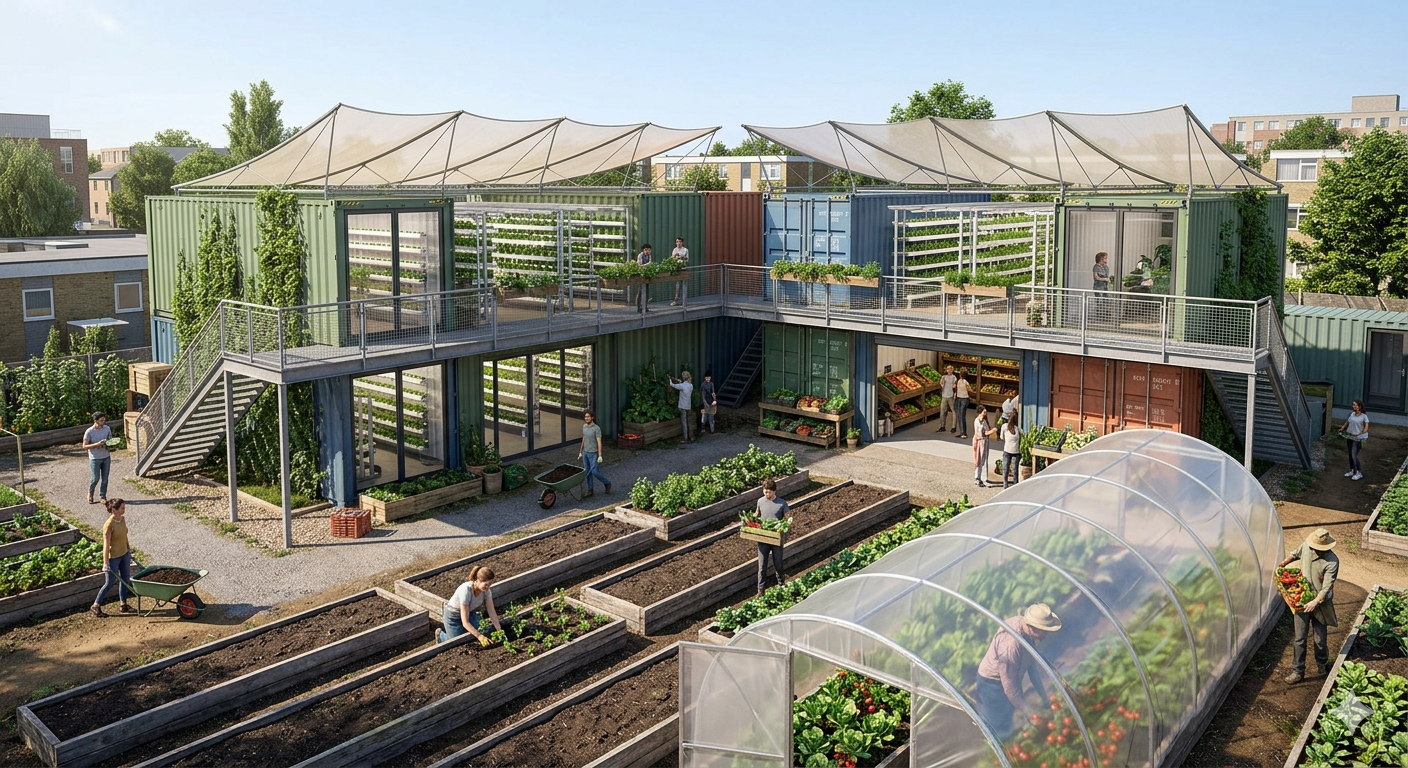
The Hyperlocal Foodhub
Eight integrated systems delivered in containers. Operational in weeks. Relocatable when necessary.
Aeroponic vertical farming
High-density, soil-free growing for leafy greens and herbs with minimal water and inputs.
Mushroom cultivation
Climate-controlled fruiting rooms producing high-protein crops from agricultural by-products.
Market garden
Outdoor productive growing with seasonal crops, soil regeneration and pollinator habitat.
Renewable energy
On-site solar generation and storage to power production and reduce running costs.
Water recycling
Closed-loop irrigation, rainwater capture and greywater reuse cut consumption by ~90%.
Anaerobic digester
Organic waste converted into biogas and nutrient-rich digestate for the growing systems.
Zero-emission distribution
Electric cargo bikes and short-loop logistics deliver produce within walking distance.
Outdoor classroom
Education and training space for residents, schools and partner organisations.
Measured by what it produces.
Each hub is designed around a target operating envelope, validated through pilot deployments and continuous monitoring.
Designed to Be Financially Viable
- Sale of Produce
- Supply to local institutions (schools, aid programmes)
- Community co-ops
- Training programmes
Target payback period per deployed hub.
A standardised playbook designed for replication across geographies.
Working With
Built collaboratively with the institutions already shaping food, land and community.
Built from the ground up.

Jimmy is a special projects operator focused on activating underutilised land and delivering community-led infrastructure.
As founder of Nomadic Community Gardens CIC, he has transformed brownfield sites into productive, multi-use environments integrating food, education and enterprise.
This work builds on that experience — evolving into deployable food infrastructure for global application.
Food Is Infrastructure
Cities depend on energy, water, and waste systems. Food should be no different.
- Reduce supply chain dependency
- Restore land
- Create opportunity
- Deliver nutrition
Let’s Build the First Network
We are seeking pilot partners, strategic collaborators, investors and humanitarian integration.